The European University (eUniv), main sponsor of Copa Colegial Andorra 2025–2026

The agreement will boost the school sports competition and strengthens the university’s ties with the country’s young people

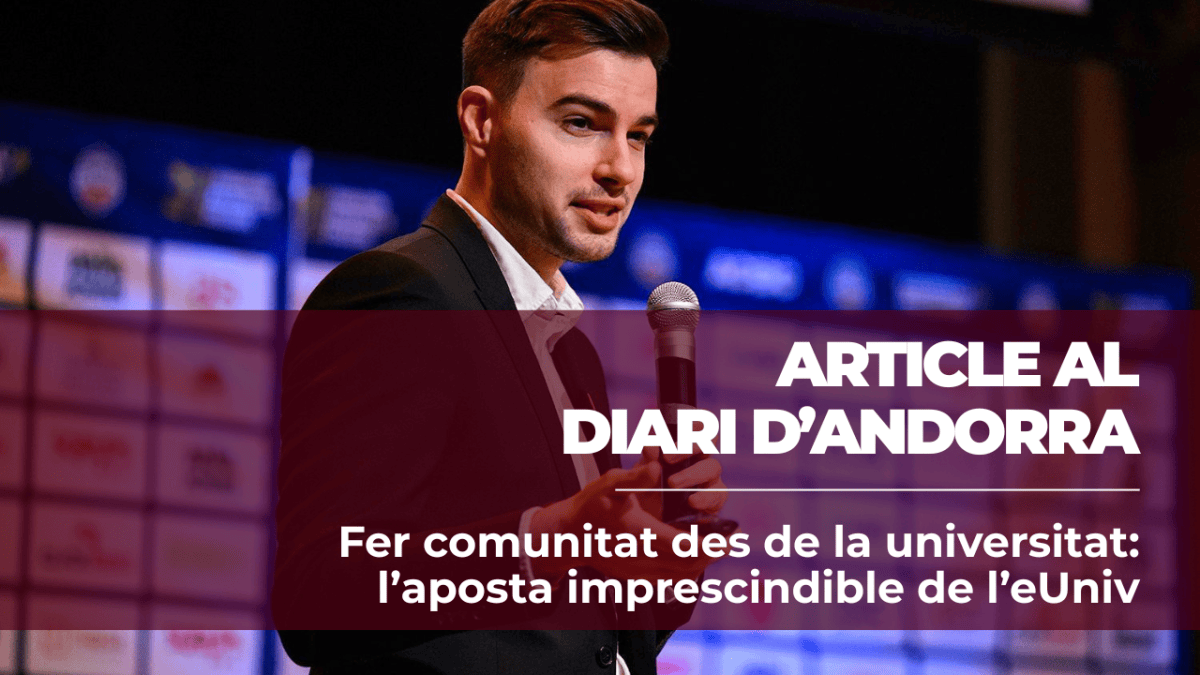
The European University (eUniv) has signed a sponsorship agreement with Copa Colegial Andorra, the leading school basketball competition, through which it becomes the main sponsor of the tournament for the 2025–2026 season. This year will see the second edition of this school tournament, and eUniv will take an active part in it to promote school sport in Andorra.

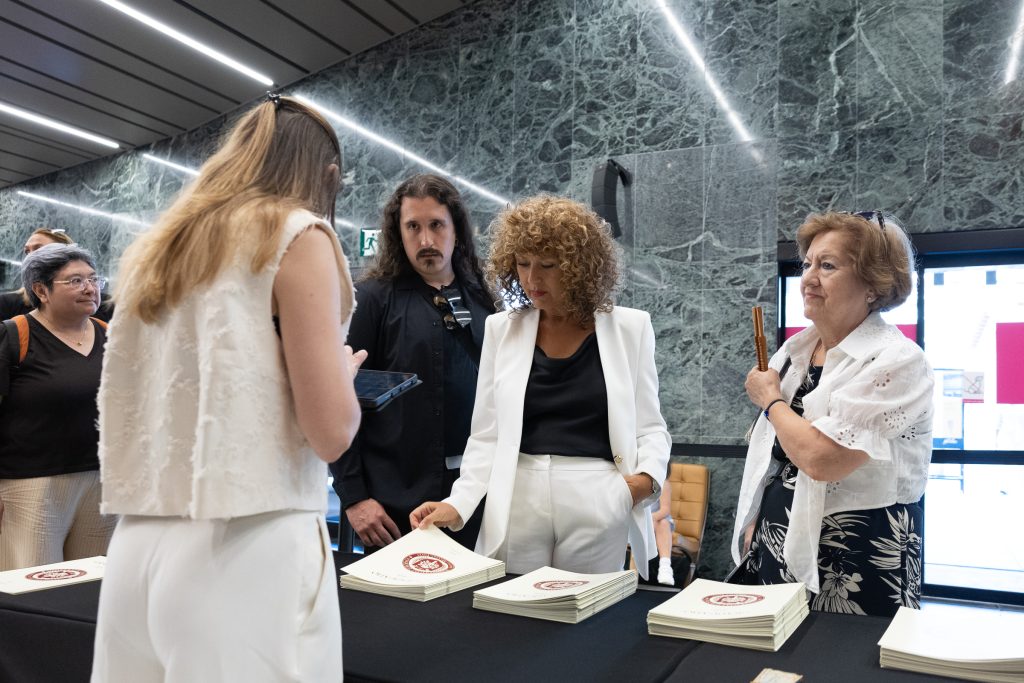
In addition, the official presentation of Copa Colegial Andorra will take place at the university’s headquarters on 17 December, bringing together captains and coordinators of the participating teams. The event will be attended by the schools taking part in the tournament: Lycée Comte de Foix, Col·legi Sant Ermengol, Agora International School Andorra, Col·legi Mare Janer, Escola Andorrana de Segona Ensenyança de Santa Coloma, Escola Andorrana de Batxillerat, Colegio Español María Moliner de Secundaria y Bachillerato and the Centre de Formació Professional Sant Julià.

The agreement provides for a broad presence of the eUniv brand in all areas of the competition: social media, information dossiers, television broadcasts and official events. The university will give its name to the “eUniv Player of the Game” award, which will recognise the MVPs of each match, with interviews and appearances on an exclusive photocall shared with Copa Colegial.

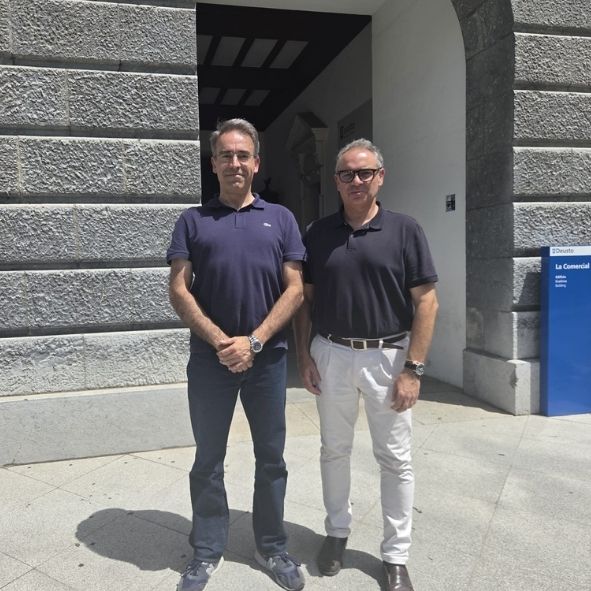
“For eUniv, this agreement is a clear commitment to the country’s young talent. We share with Copa Colegial values such as effort, teamwork and the all-round education of the person,” said Anton Miret, manager of the European University (eUniv). For his part, Sergi Àlex, president of the Catalan School Basketball Association and director of Copa Colegial Catalunya-Andorra, stressed that “this is a very valuable agreement for our project in Andorra; it is a pleasure to see how eUniv is backing not only the Copa but above all the country’s young people.”

With this sponsorship, eUniv consolidates its commitment to Andorra, education and sport, and takes a further step in its mission to bring the European online university closer to the country’s new generations of talent.

The European University eUniv joins MeCareer Andorra to drive a new talent ecosystem in the country

The university becomes a strategic hub for training and professional guidance based on cognitive artificial intelligence

The European University of the Principality of Andorra (eUniv) has officially joined MeCareer Andorra, the national programme that integrates science, technology and a shared cognitive intelligence network to boost professional development in the country. With this collaboration, eUniv is consolidating itself as a strategic talent hub, connecting students, professionals and companies in a digital ecosystem of learning and continuous guidance.

Within the framework of MeCareer Andorra, technology plays a central role: conversational intelligent agents, based on cognitive intelligence, interact with users to analyse interests, skills and professional aspirations. On the basis of this diagnosis, they can guide them in a personalised way towards the most suitable training pathways within eUniv’s academic offering.

“With MeCareer Andorra we are taking a step forward in our mission: to offer flexible, European higher education aligned with the real needs of the Andorran labour market,” university sources highlight.

As an educational node of the MeCareer system, eUniv makes available to the country its catalogue of bachelor’s degrees, master’s degrees and advanced programmes, delivered 100% online and fully integrated into the European Higher Education Area (EHEA). The programme’s intelligent agents will guide each person towards the degrees that are best aligned with their professional goals and with the current demands of Andorra’s economic fabric.

The participation of eUniv in MeCareer Andorra makes it possible to:

  • Strengthen the university–business–talent link, making it easier for companies to identify emerging profiles and for the university to adapt its training offer to the new skills required.
  • Boost the employability and upskilling of young people and working professionals, with flexible learning pathways and continuous guidance.
  • Move towards a lifelong learning model, based on data and on constant analysis of labour market developments.

“The alliance with MeCareer fits fully with our sequential and online teaching model, designed so that each student can progress at their own pace, but now with an additional layer of intelligent and personalised guidance,” they stress from eUniv.

With this incorporation, eUniv reaffirms its commitment to the digital transformation of higher education in Andorra and to the creation of an environment in which the country’s talent can grow, redirect itself and connect with the professional opportunities of the present and the future.

eUniv takes part in EQAF 2025 in Budapest with the presence of its Quality Director

European University (eUniv) is taking part in the 2025 European Quality Assurance Forum (EQAF), held at Corvinus University in Budapest (Hungary) from 12 to 14 November, through the participation of its Quality Director, Mr Aleu Miret.

As highlighted by the Andorran Quality Agency (AQUA), the forum is a key platform for debate and the exchange of good practices among agencies, universities, associations and other international stakeholders involved in quality assurance in higher education. This year’s main theme is “Quality assurance in times of crisis: ensuring stability, autonomy and international cooperation in higher education.”

Through Mr Miret’s participation in this event, eUniv strengthens its commitment to quality, institutional resilience and international cooperation, actively contributing to the discussions on how to safeguard academic values and reinforce quality assurance systems even in times of uncertainty.

Coming soon: II International Research Forum of the Alma Mater University Institute on AI Challenges in Higher Education: Addressing Faculty Concerns

Artificial Intelligence (AI) is rapidly transforming higher education, opening new opportunities but also presenting major challenges for faculty. Effective implementation requires in-depth analysis of educators’ concerns—particularly regarding job security, evolving roles, and the need to acquire new skills.


This forum, titled “Challenges of AI in Higher Education: Addressing Faculty Concerns”, aims to provide a space for reflection and dialogue on how institutions can proactively address these challenges. Discussions will focus on investing in targeted training programs for educators and integrating AI into teaching without compromising pedagogical value or the vital role of faculty.

Among the key concerns facing faculty and academic institutions are the following: 

  • Job security and redefinition of the teaching role: The integration of AI into education may create uncertainty about the future of teaching staff, particularly regarding their traditional roles and the need to acquire new technological competencies. It is essential to examine how AI can complement the work of faculty without dehumanizing the educational process.
  • Faculty training and adaptation: Many instructors lack adequate training to effectively use AI in their teaching. A lack of digital skills and resistance to change may hinder the adoption of these technologies. Specific training programs are needed to enable faculty to integrate AI with confidence and sound pedagogical judgment.
  • Ethics and responsible use of AI: The increasing availability of AI tools raises concerns about academic plagiarism, transparency in assessment, and the potential overreliance on such technologies by students. Clear regulations must be established to govern AI use and promote a culture of responsible implementation.
  • Digital divide and unequal access: Not all students and faculty have equal access to the necessary technology and training to utilize AI. This can lead to inequalities in the educational experience and make large-scale implementation more difficult.
  • Data protection and privacy: The use of AI tools involves collecting and analyzing large volumes of student data, raising concerns about privacy and security. Mechanisms must be established to ensure the ethical and legal use of personal information.
  • Impact on learning quality: While AI can support education, there is a risk of losing human interaction and hindering the development of essential skills such as critical thinking and creativity. It is crucial to strike a balance between AI use and the active presence of teachers in the educational process.

For those interested in this forum, all information can be found by clicking the following link.

European University-IMF takes part in the 2nd Andorra Forum: Public-Private Alliances for the Digital Transition

Dr. Marc Escolà, Academic Protonotary at European University-IMF, took part on Wednesday, October 29, in the roundtable “How Digital Solutions Are Incorporated in Educational Institutions,” together with experts from Andorra, Spain, and Latin America, as part of the 2nd Andorra Forum: Public-Private Alliances for the Digital Transition, organized by the Government of Andorra and the Ibero-American General Secretariat.


Dr. Escolà delved into topics such as innovation in academic management and educational innovation—areas that European University-IMF has been advancing and leading for years.


The 2nd Andorra Forum is an international meeting space that seeks to drive digital transformation through collaboration between the public and private sectors. It forms part of Andorra’s commitment within the framework of the Ibero-American Summits to build an inclusive, secure, equitable, and transparent digital society.


The event aims to continue the work begun in the first edition and to consolidate Andorra as a benchmark in promoting sustainable, collaborative digital policies. Over two days, the forum brought together institutional leaders, technology companies, international experts, and civil society organizations to share knowledge, experiences, and innovative solutions to the main digital challenges.

eUniv participates in the First Armand de Fluvià Symposium on Genealogy and Heraldry

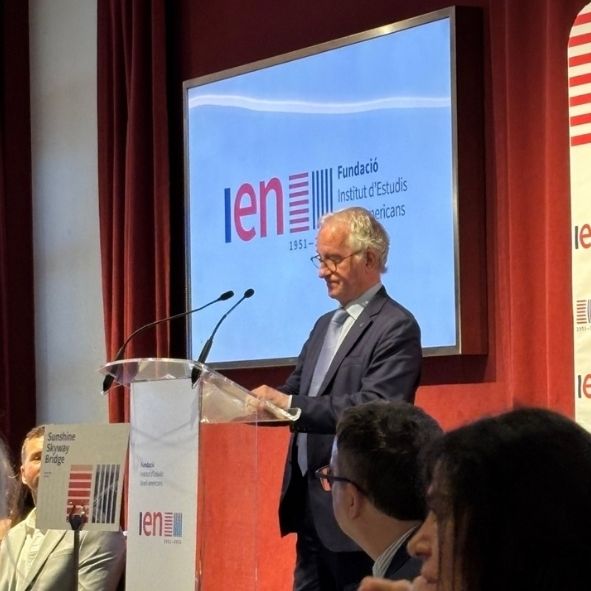
On October 15, 2025, the First Armand de Fluvià Symposium on Genealogy and Heraldry was held at the headquarters of the Institut d’Estudis Catalans in Barcelona, organized by the Societat Catalana d’Estudis Històrics and the Institució Armand de Fluvià i Escorsa de Genealogia i Heràldica. The symposium marked the first anniversary of the passing of Armand de Fluvià, a distinguished scholar in the field and, among many other initiatives, the driving force behind Armoria, a journal specializing in the subject.


Dr. Josep Serrano, director of the Fiter i Rossell Chair in Legal History at eUniv, took part in the symposium by presenting a paper on Armand de Fluvià’s thesis, published in 1994, which refuted the application of the Aragonese legal institution Casamiento en casa to the marriage between Count Ramon Berenguer IV of Barcelona and the heiress to the Aragonese realm in 1137. As he had already done in an earlier 1997 publication, Dr. Serrano argued the case in the same legal vein as Fluvià.

Commemoration of the 25th Anniversary of the Canonization of St. Pere M. Sans Jordà, OP

On Sunday, 28 September 2025, events were held to commemorate the 25th anniversary of the canonization of Saint Pere M. Sans Jordà, a native of Ascó and a Dominican ordained in the Diocese of Urgell, who served as Vicar Apostolic of Fujian in eighteenth-century China, where he died a martyr. The day was coordinated by the Fiter i Rossell Chair of eUniv and the Higher Institute of Religious Sciences of Barcelona, with the support of the Chinese Catholic Community of Catalonia.


The event took place in the Aula Magna of the Conciliar Seminary of Barcelona, under the chairmanship of Mn. Josep Chisvert, Vice-Chancellor of eUniv and Delegate for Education of the Diocese of Urgell, who conveyed the support for the event from the Episcopal Co-Prince of Andorra, Mn. Josep L. Serrano Pentinat.


The historical figure of the martyred bishop was first presented by Dr. Josep Serrano Daura, director of the Fiter i Rossell Chair, and his spiritual dimension was later addressed by speakers from China, as well as by representatives of the Order of Preachers and the Community of Sant’Egidio.


The day concluded with a solemn Eucharist in the Seminary’s church, presided over by Mn. Javier Vilanova, Auxiliary Bishop of Barcelona, and concelebrated by seven priests. The ceremony, which was followed in Chinese, Catalan and Spanish, was attended by about 300 people, including descendants of the Saint’s family, who travelled from Ascó to present a relic of his to the Chinese community of Barcelona.


eUniv plans to publish this year a study by Dr. Serrano Daura on the historical episode of the persecutions of Christians in mid-eighteenth-century China.

Academic publications by eUniv faculty

Dr. Daniel Alvàrez, Professor of Classical Languages at the Faculty of Arts and Humanities of eUniv (Universitat Europea-IMF), has in recent months authored several contributions that bring into dialogue philology, legal history, and the humanistic tradition. His publications combine the analysis of Latin and Romance sources with a contextual reading of legal and intellectual debates that have shaped European culture.


In Cuadernos de Historia del Derecho (30), he analyzes a late-medieval legal opinion on Peace and Truce—“El Consilium sobre ruptura de Pau i Treva de Jaume de Montjuïc, entre d’altres”—and reconstructs the legal and institutional arguments that governed conflict in Catalonia during the period (DOI: 10.5209/cuhd.91647). In parallel, in Linguistica e Filologia (44) he proposes “Two key influences on the Hamiltonian System,” a study that traces two key influences of philological and conceptual origin within an analytical system that converses with the classical tradition (DOI: 10.13122/LeF_44_p9).


The public projection of this research has taken shape in several talks and chapters. On 5 July 2024, at the University of Salamanca, he presented “Bertran de Peus en el caso del Gobernador Requesens (1421) y su dictamen sobre la doble lugartenencia,” a reading on governance and the delegation of power in the fifteenth century (within the framework of project PID2020-117702GA-I00/MICIN/AEI/10.13039/501100011033). And on 17 July 2025, at the 19th International Congress of the IANLS (Aix-Marseille University), he examined the humanist reception of Gorgias with “Gorgiae Helenae Encomium a Vincentio Marinerio translatum (1639).” This trajectory is completed by three contributions to collective volumes: a critical profile of Francesco Filelfo in Roma Latina, Roma aeterna (2023); the edition and commentary of Latin documentation on “Defenestratio ex Deputatione…” (1425–1428) in Acta Conventus Neo-Latini Lovaniensis (with mention of the same PID project); and the essay “La Dignidad en los juristas catalanes bajomedievales” in Estudios Luso-Hispanos de Historia del Derecho (vol. III, 2024), where he explores the legal and doctrinal meaning of the concept of dignity in the Catalan tradition. Taken together, it underscores eUniv’s role in research that connects classical texts, legal culture, and intellectual history.


Congratulations to Dr. Alvàrez on these contributions, which strengthen research in classical philology and legal history at eUniv.

  1. Published articles:
  •  “El Consilium sobre ruptura de Pau i Treva de Jaume de Montjuïc, entre d’altres”, Cuadernos de Historia del Derecho 30, pp. 75-101. ISSN: 1133-7613. DOI: https://doi.org/10.5209/cuhd.91647.
  •  “Two key influences on the Hamiltonian System”, Linguistica e Filologia 44, pp. 9-26. ISSN: 1594-6517. DOI: 10.13122/LeF_44_p9.
  1. Conferences done:
  •  “Bertran de Peus en el caso del Gobernador Requesens (1421) y su dictamen sobre la doble lugartenencia”. V Encuentro Hispano-Luso de Historiadores/as del Derecho. Universitat de Salamanca. Facultat de Dret. Salamanca. 31 – 5 de juliol (5 de juliol) de 2024. [Presentat dins del marc del projecte PID2020-117702GA-I00/MICIN/AEI/10.13039/501100011033]
  •  “Gorgiae Helenae Encomium a Vincentio Marinerio translatum (1639)”. 19th International Congress of the International Association for Neo-Latin Studies (IANLS). Universitat d’Aix Marseille. Aix en Provence. 15 de juliol – 19 de juliol (17 de juliol) de 2025.
  1. Published records:
  •  “De Philelpho, «homine profecto maioris æstimationis quam doctrinæ»”. N. De Mico, F. Deraedt, C. Laes, L. Miraglia, D. Sacré eds.(2023). Roma Latina, Roma aeterna. Acta conventus Academiae Latinitati Fovendae (Romae, 12-15 VI 2022), 2 vol., Marneffe: Melissa, vol. I, pp. 241-266. ISBN: 9782872900329.
  • “Defenestratio ex Deputatione iurisperiti Narcissi de Sancto Dionisio et acta pertinentia Latine scripta (1425–1428)”. Schaffenrath, Florian; Sacré, Dirk (ed.). Acta Conventus Neo-Latini Lovaniensis. Proceedings of the Eighteenth International Congress of Neo-Latin Studies (Leuven 2022), vol. 18, pp. 143-153. ISBN: 978-90-04-69557-3. [Publicat dins del marc del projecte PID2020-117702GA-I00/MICIN/AEI/10.13039/501100011033]
  • “La Dignidad en los juristas catalanes bajomedievales”. Capdeferro, Josep coord. (2024). Estudios Luso-Hispanos de Historia del Derecho, vol. III, Madrid: Ed. Dykinson, pp. 27-50. ISBN: 978-84-1070-400-8. [Publicat dins del marc del projecte PID2020-117702GA-I00/MICIN/AEI/10.13039/501100011033]

The European University and the Private Foundation Institute of Financial Studies sign an association agreement

On September 16, 2025, the Rector of the European University (eUniv), Dr. Antoni Noguero, and the Director General of the Private Foundation Institute of Financial Studies (IEF), Mr. Ferran Teixes, signed an association agreement between the two institutions. Under this agreement, the Private Foundation Institute of Financial Studies may, together with eUniv, implement non-official university-specific qualifications, in accordance with the current university legal framework.


The Institute of Financial Studies (IEF), headquartered in Barcelona, is a leading financial hub for innovation and knowledge in finance.


With this collaboration, eUniv takes another step toward internationalizing its projects and establishing relationships with entities and institutions around the world.

New Research Publication from eUniv

The journal VESTNIK SOCIAL SCIENCES of the Moscow State Linguistic University publishes in its issue 1 (858) of 2025 the article by Pol Bartolomé entitled The Andorran Political System Revisited (https://journals.rcsi.science/2500-347X/article/view/296854). In this work, Bartolomé, who was the coordinator in the preparation of teaching material on the Andorran Political System for the eUniv’s Bachelor in Political Science program, introduces the unique case of Andorra’s parliamentary Co-principality —unmatched within the framework of contemporary governance— into the political science literature, where it has so far received very limited attention.


The article offers the international academic public a comprehensive analysis of Andorra’s political system, focusing on its institutional structures, historical evolution, and governance dynamics. Using a historical-institutional approach, the study examines the transformation of Andorra’s political system from its medieval Paréages to the adoption of its 1993 Constitution, which formalized its status as a sovereign parliamentary democracy. The research delves into the role of key institutions, including the General Council, the electoral system, and the development of political parties. At the same time, it also examines the influence of external factors, particularly Andorra’s evolving relationship with the European Union. To this end, the paper integrates a comparative politics framework, contrasting Andorra’s governance structure with other European microstates such as Monaco, San Marino, Liechtenstein, and Luxembourg. This methodological approach makes it possible to assess Andorra’s institutional adaptability, democratic consolidation, and international positioning. Through the analysis of Andorra’s legal, political, and territorial organization, this study contributes to the understanding of small-state governance and the dynamics of sovereignty in contemporary Europe. The findings highlight Andorra’s institutional resilience and its ability to balance historical continuity with modern political transformations, offering valuable insights for scholars of comparative politics, constitutional law, and European integration.